

Our Farmers
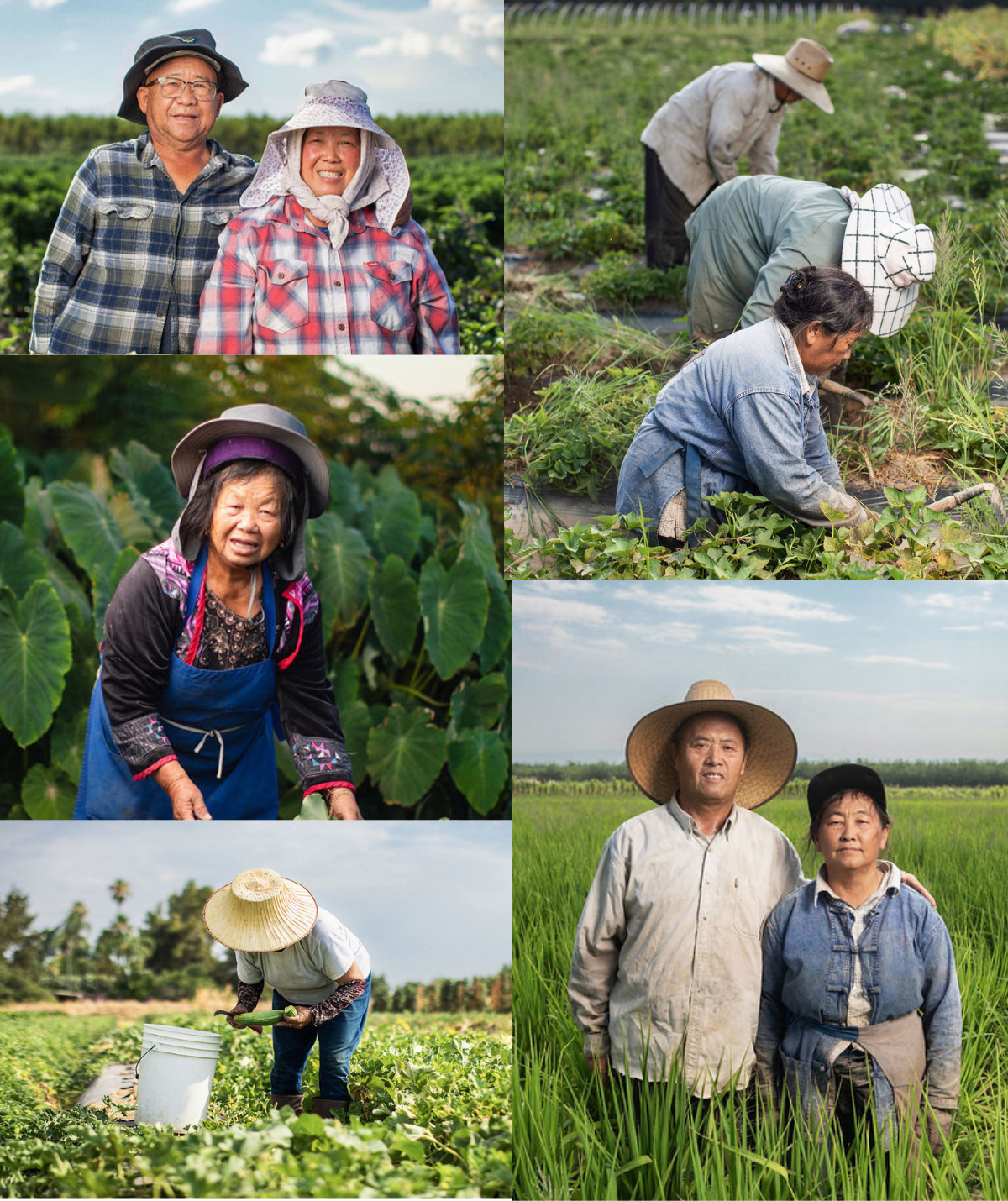
Meet Our Farmers
In Fresno County, Asian farmers have become integral to the region's agricultural landscape. Primarily settling in the Central Valley of California, these farmers bring with them a rich heritage of farming traditions passed down through generations. Despite their agricultural expertise, they face numerous challenges, including access to land, water resources, and language barriers. Many navigate complex bureaucratic processes to secure land leases or purchase property, often contending with discrimination and limited financial resources along the way.
Asian farmers have carved out a niche for themselves, specializing in a diverse array of Asian Specialty Crops. Among their primary cultivations are vegetables like bok choy, bitter melon, and various herbs and greens that hold cultural significance within their community.
To sustain their farming businesses, Asian farmers employ a variety of strategies that emphasize community support and collaboration. Many participate in farmer cooperatives, pooling resources and knowledge to access markets and negotiate better prices for their crops. Furthermore, they actively engage with agricultural extension programs and local organizations that provide technical assistance, training, and advocacy on their behalf. Through resilience, determination, and a deep-rooted connection to the land, Asian farmers in Fresno County continue to thrive, enriching the region's agricultural tapestry while preserving their cultural heritage for generations to come.

“I first came to the United States from Laos in 1987. I was only 15 years old. Back when we first came to the U.S., we didn’t know any English. I saw my parents working hard in the field, so I had to go out and help them too even when I was working two other jobs. I enjoy farming because it’s in my blood, it’s my family's legacy. I love that I am self-employed, and that I am self-sufficient because I’ve learned how to grow my own food. A few of the crops I grow are bitter melon, mustard greens, green onion, cilantro, and Chinese eggplant. The hardest part of farming is the labor, we’re constantly out in the heat and cold. During the winter when we harvest daikon, it’s cold and hard because we have to pull it out, wash it, scrub off the hairs, and then pack it.”
- Vayhao

“I officially began my farm business in 2021. Prior to that, my hands have never been stained dirty from farming. The sudden loss of my son in 2014 caused me to fall into depression and despair. After that accident, my husband would go to work and the rest of my children would go to school… which left me home alone with my thoughts and feelings. Often, it felt like there was a knife to my heart that kept cutting deeper the more I dwelled in my son’s passing. For this reason, I began farming as a side hobby to distract me from having negative thoughts that would consume me with stress. It initially began with growing crops such as basil, green onion, and cilantro. Just enough to feed my family and I. Eventually, a friend of mines encouraged me to expand my interests in farming and helped me begin producing strawberries. I would say the rockiest part of my farming journey was the beginning. I didn’t know how to get started or where to buy the materials and equipment I needed. However, with my friend’s help, I was able to learn and grow from her guidance. I plan to continue farming for as long as I can to help strengthen and maintain my livelihood as well as provide for my children.”
- Der
Behind every vegetable is a family, a farm, and a legacy.
Buy from the hands that grew it.
Shop fresh, seasonal produce grown by the farmers you just met — every purchase goes straight back into their livelihoods.